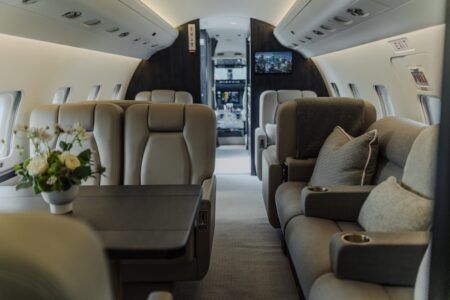


Natalie Rodríguez, principal and VVIP aircraft interior designer at Natalie Rodríguez Luxury Design, shares all about replacing metal inlays with leather welt cord on a recent BBJ refurbishment, as well as current industry challenges, and translating residential design influences.
What’s your favourite detail from a recent design?

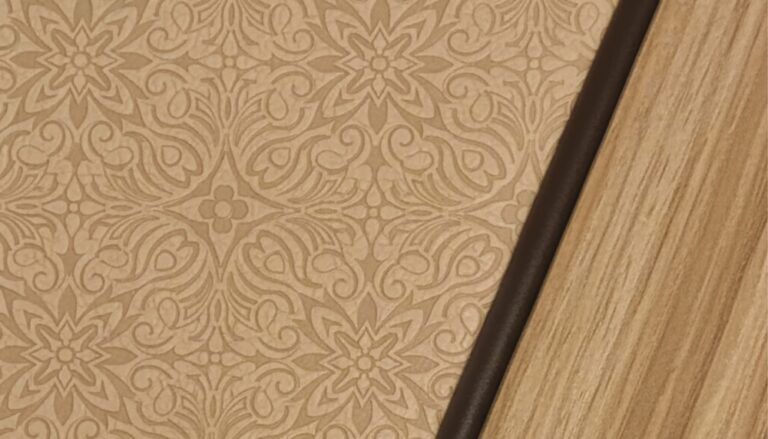
One detail I had fun with recently came out of a BBJ refurbishment, where the existing cabinetry had very slender plated metal inlays. Rather than replating these pieces, we saw an opportunity to introduce something softer and more tactile. We replaced the metal with leather welt cord from Garrett Leather, which fit beautifully within the existing channels. We complemented this with a textured leather insert in place of a previously faux-painted serpentine marble surface, and refinished the veneer in satin in lieu of high gloss. These changes transformed the character of the cabinetry.
I love solutions like this because refurbishment isn’t always about a one-for-one replacement. Sometimes the more sophisticated approach is understanding what is already there and finding an unexpected way to reinterpret it.
What crafts, materials or ideas would you like to explore next?
I continue to be interested in materials and processes that close the gap between residential design and what is technically achievable aboard an aircraft. F/List, for example, has heat-release compliant veneer that I’d love to explore. I’m also drawn to their oil-finished wood for the depth and natural character it brings to the material.
Another area we’ve been exploring is using stone or another hard surface in combination with carpet, as you would an area rug in a residence.
I’m also excited by technologies that give us more freedom to introduce these more residential details intelligently. On a current narrow-body project we’re using Ingenio Aeropucks to incorporate decorative bedside sconces as carry-on items – creating a residential moment without the cost and certification implications of permanently integrating the fixtures.
What challenges are private aircraft designers faced with right now?
Demand is exceptionally strong, which is wonderful, but it naturally puts pressure on resources throughout the industry – from design and engineering through suppliers, fabrication and completion centre availability. At the same time, clients want to move faster. That requires us as designers to be increasingly strategic about when decisions are made, how we engage suppliers and specialist partners, and how we protect the original design intent throughout execution.
We’re also seeing increasingly creative approaches to procurement and project delivery. This can create great opportunities, at the same time requiring very strong coordination. The challenge is how we become more agile without compromising quality, certification, craftsmanship or the integrity of the design.
How are you inspired by other sectors?
Our practice is mostly focused on private aircraft, but we’re always looking beyond traditional aircraft vocabulary for inspiration, especially to luxury residential and hospitality design.
Recently, we’ve been exploring dimensional wall surfaces, new veneer expressions and non-textile flooring applications. What interests me most is understanding why something works in one environment and finding a way to translate the experience into an aircraft.
This interview was first published as part of the Americas Design Forum in the September/October 2026 edition of Business Jet Interiors International.