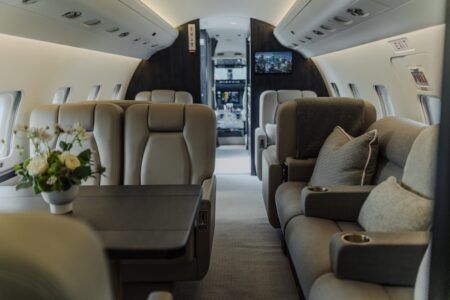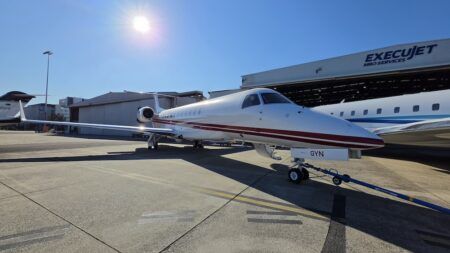


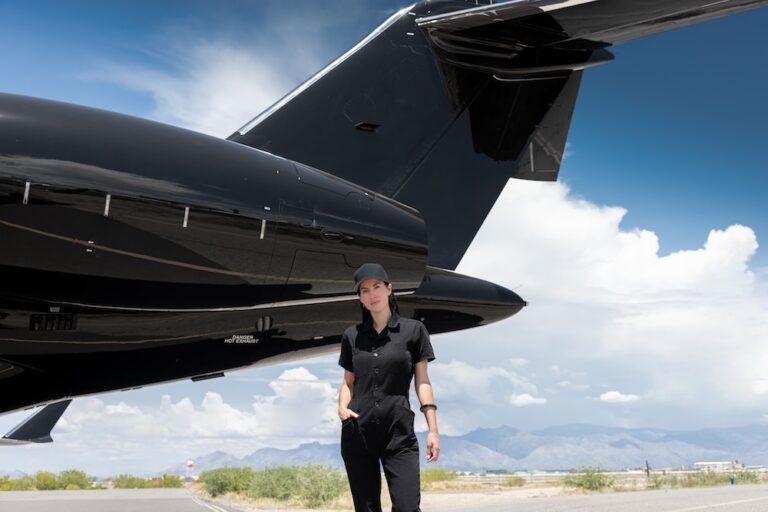
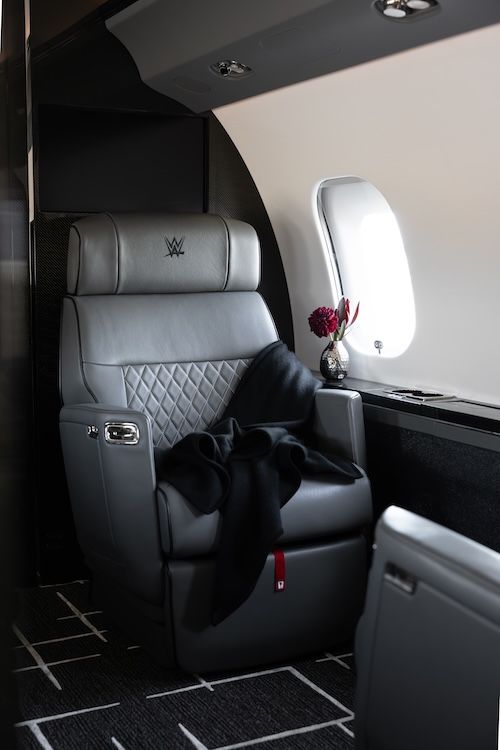
Sarah Mespelt Larranaga, aviation design and engineering expert at Sarah Larranaga Aviation Design, details a recent Global 6500 completion, an onboard DJ booth idea, completion capacity challenges, and a custom Mercedes-Benz Sprinter interior exemplifying the two-way crossover of automotive and aviation design.
What’s your favourite detail from a recent design?
One recent project I’m particularly proud of was a Bombardier Global 6500 completion. As an aviation designer and engineer, I approach an aircraft interior as much more than a collection of beautiful materials and finishes. It is an integrated environment where design, engineering, technology, acoustics, lighting and craftsmanship all have to work together within the very specific constraints of an aircraft.
Through my design firm, I work closely with aircraft owners, completion centres, manufacturers and specialist suppliers, and this Global 6500 was a great example of that collaborative process.
The objective was to create an interior that felt sophisticated and timeless while integrating technology at a level that reflected how the owner actually lives, works and entertains. Connectivity was therefore fundamental. We incorporated Starlink high-speed connectivity, allowing the cabin to function much more like a home, office or entertainment environment on the ground.
Entertainment was another major focus. The cabin incorporated a large-format 4K OLED display together with a custom-tuned digital surround-sound system. Rather than treating audio as an accessory added late in the completion, we considered the acoustic experience as part of the overall cabin design. Speaker placement, cabinetry, interior architecture and cabin materials all influence sound quality, so these elements need to be coordinated from an early stage.
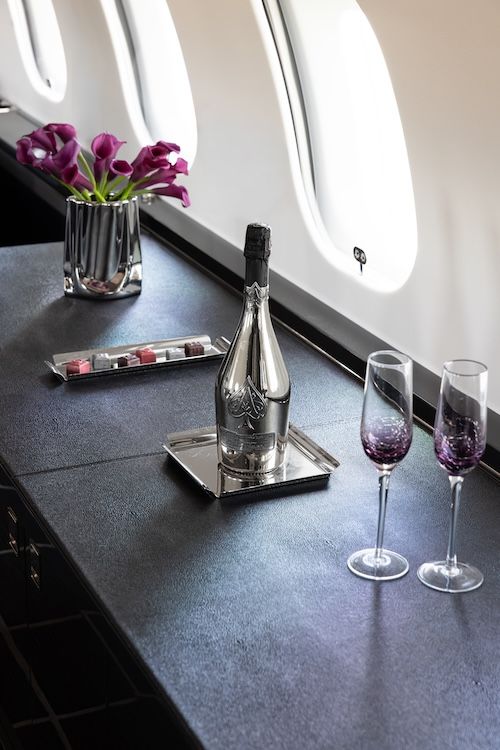
We also incorporated Alto Bluetooth integration for cabin audio and video, giving passengers an intuitive way to connect their personal devices and content to the aircraft’s entertainment environment. One of my priorities with technology is that it should be sophisticated behind the scenes but extremely simple for the passenger to use.
Lighting was equally important. The aircraft features a full-spectrum RGBW LED mood-lighting system capable of producing millions of colour combinations. The owner can mix, personalise and save preferred lighting scenes, effectively changing the personality of the cabin for different phases of flight, times of day, destinations or occasions. Lighting has an enormous influence on how materials, colours and textures are perceived, so we considered the lighting and material palette together rather than designing them independently.
The tactile details were just as important as the technology. We developed custom leather accessories with Aeristo, extending the interior design language into the smaller objects passengers interact with throughout a flight. We also coordinated custom chinaware, crystal, flatware and blankets by Euler, creating a consistent experience from the architecture of the cabin down to the tabletop and soft goods.

Externally, the aircraft received a custom silver super-metallic paint finish. Metallic finishes can be particularly demanding on a large aircraft because the application must remain extremely consistent across a substantial surface area. The goal was to give the Global 6500 a distinctive presence without making it overly fashionable or something that would quickly date.
What I enjoyed most about this project was the level of integration. My background combines aviation design with engineering and aircraft completion, so I am constantly considering not only how something looks, but also how it is manufactured, installed, certified, maintained and experienced in flight.
For me, the successful outcome was an aircraft that doesn’t feel as though technology, luxury materials and aviation engineering were developed separately and then assembled. They feel like parts of one environment. That balance – luxury, comfort, functionality, technology and timeless design within the technical constraints of aviation – is central to my design philosophy.
What design techniques, crafts, materials or inspirations would you like to explore?
One area I’m particularly interested in exploring is the integration of a professional-level custom sound system and DJ booth into a private aircraft, taking inspiration directly from the music and recording industries.
The interesting challenge isn’t simply installing more powerful audio equipment. It is understanding how to create a genuinely high-quality listening and entertainment environment inside an aircraft.
I would like to explore this together with a highly engineered acoustic and sound-isolation package. Aircraft cabins present a fascinating acoustic challenge because you are dealing with ambient aircraft noise, vibration, lightweight interior structures and strict limitations on weight and available space.
From an engineering perspective, every acoustic material and component has consequences for weight, certification, installation and maintainability. From a designer’s perspective, the equipment also needs to integrate beautifully into the cabin rather than making the aircraft feel like a recording studio filled with equipment.
I think there is an opportunity to take knowledge from professional studios, live-performance environments and the music industry and reinterpret it specifically for aviation. A DJ booth, for example, could be architecturally integrated into cabinetry so that when it isn’t being used, it remains part of a sophisticated VIP interior.
That combination of disciplines is what interests me most: taking something that already exists at an extremely high level in another industry and asking, how can we rethink this specifically for an aircraft?
What challenges are private aircraft designers faced with right now?
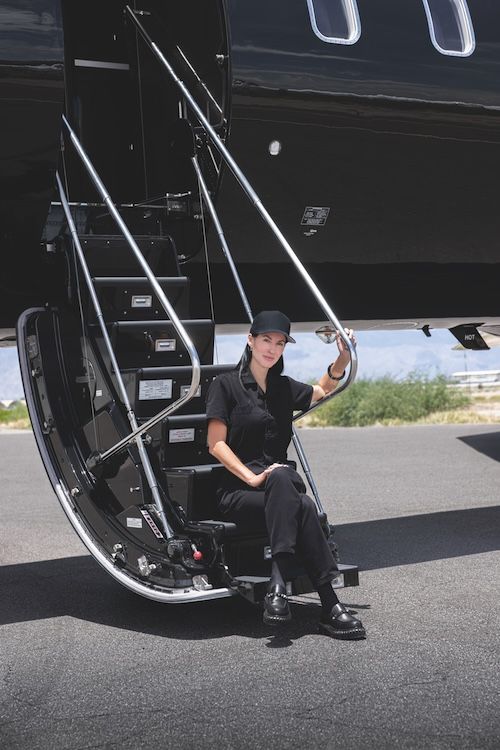
One of the biggest challenges at the moment is capacity within the completion, refurbishment and maintenance infrastructure. There is tremendous demand for refurbishment, paint and interior completion work, but finding available slots at high-quality facilities can be difficult.
At the same time, the newest generation of ultra-long-range business aircraft is physically becoming much larger. Aircraft such as the Bombardier Global 7500 and Global 8000, Gulfstream G700 and G800, and the upcoming Dassault Falcon 10X, create a different infrastructure requirement. Many existing paint facilities, completion centres and maintenance hangars were originally designed around smaller generations of business jets. That creates both a scheduling and logistical challenge. You may have an excellent facility with the craftsmanship and technical capability required for a project, but the hangar or paint bay simply wasn’t designed around aircraft of this scale.
For owners, that means the completion strategy needs to begin much earlier. As a designer and engineer, I’m increasingly thinking beyond the design itself and considering facility capability, scheduling, the supply chain, certification, engineering resources and installation sequencing from the beginning of a project.
Private aviation design has always required a balance between creativity and technical reality. Today, infrastructure and capacity have become another major part of that equation.
Can you share a recent design developed for another sector?
I’m particularly excited about a custom Mercedes-Benz Sprinter interior for a gaming client. What made the project especially interesting was that the client wanted the vehicle to incorporate many of the qualities and technologies associated with a contemporary private jet.
Instead of approaching the Sprinter as a conventional automotive conversion, I approached it much more like an aircraft cabin. We incorporated aviation-grade leather, Starlink high-speed connectivity, a large 4K OLED display, a custom-tuned digital surround-sound system, and full-spectrum RGBW LED mood lighting capable of producing millions of custom colour combinations that the client can create and save.
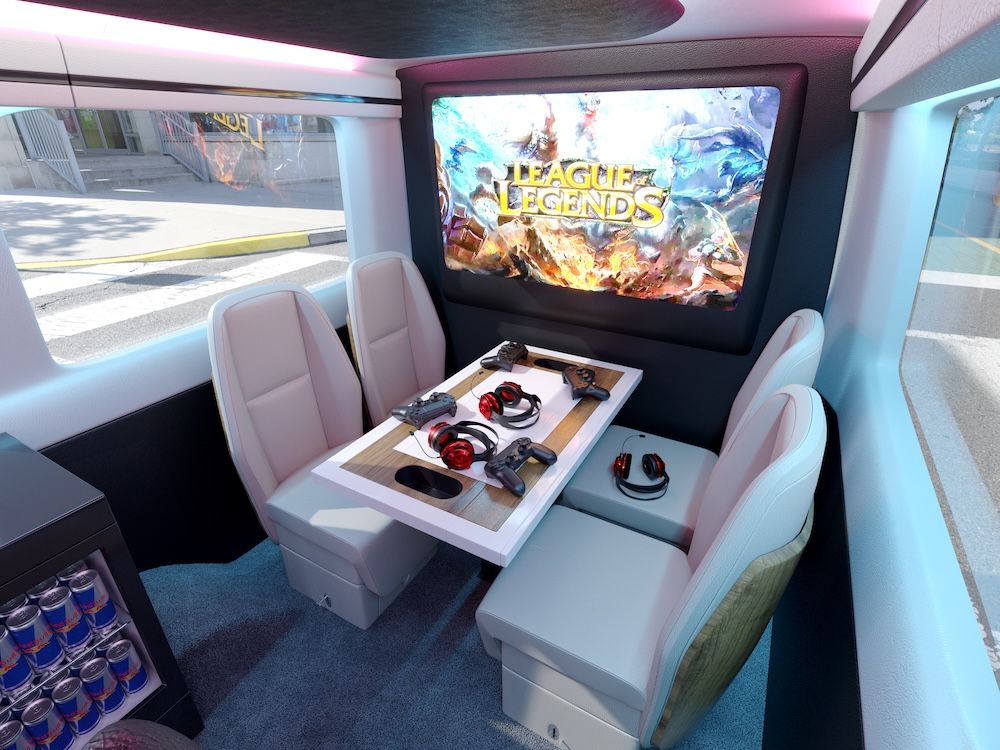
We also integrated Alto Bluetooth technology for audio and video, allowing personal devices and entertainment sources to connect naturally with the environment. Custom leather accessories by Aeristo further reinforce the connection to bespoke aviation interiors.
For a gaming client, connectivity, display quality, sound and lighting aren’t secondary features – they are fundamental to the experience. That gave us an opportunity to explore how all four could operate together to transform a relatively compact space.
What’s particularly interesting to me is the two-way exchange of ideas between automotive and aviation design. Private aviation can influence automotive interiors through materials, craftsmanship, lighting, space planning and the seamless integration of technology. At the same time, projects like this Sprinter allow us to experiment with entertainment, digital interfaces and rapidly evolving consumer technology that can later inform aircraft interiors.
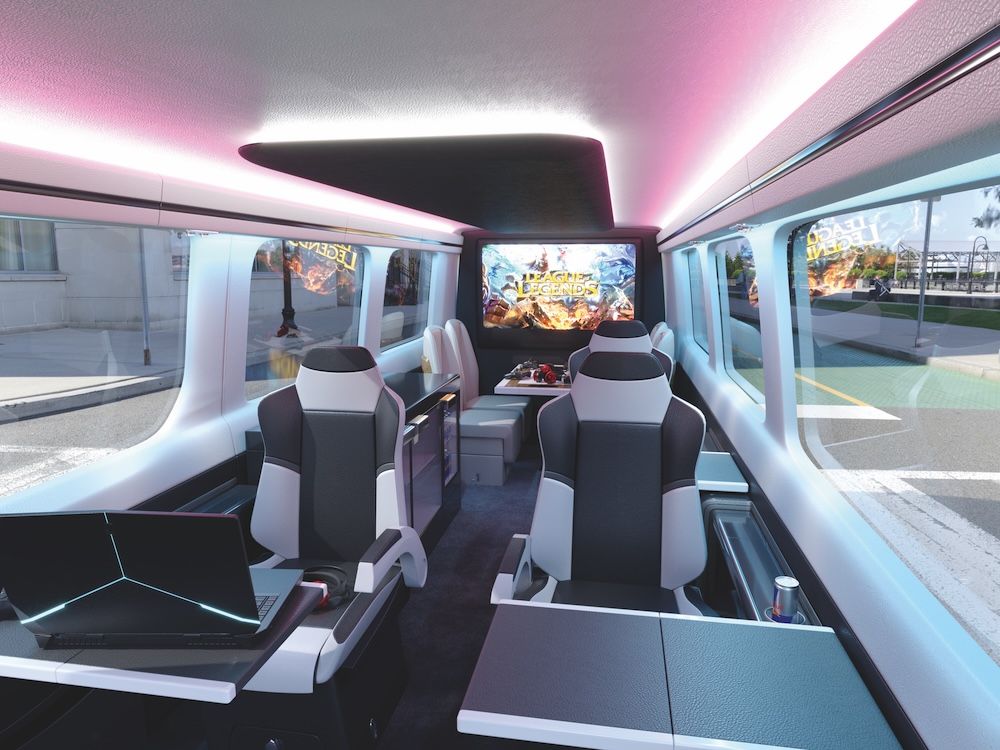
My career has involved highly customised private aircraft, including large-cabin and VIP aircraft, so I’m accustomed to working in environments where every millimetre has to earn its place and where beautiful design must coexist with engineering, certification and functionality.
The Sprinter project applies that same mentality on a different scale. Whether I’m designing a Global aircraft, a large VIP cabin or a custom vehicle, my objective remains remarkably consistent: create an environment that feels personal to the owner, technologically advanced, beautifully crafted and effortless to use. We stand on the principle of creating one-of-one aircraft interiors and exteriors for every client.
All images: Sami Jo Studios/@Samijostudios
Parts of this interview were first published in the Americas Design Forum in the September/October 2026 edition of Business Jet Interiors International.