

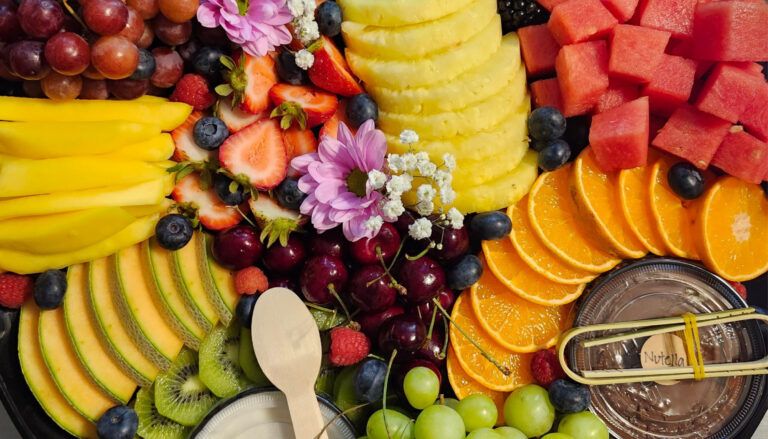

Brody Speno, founder of Miami-based private jet catering firm SkyDine, discusses food trends, catering for a presidential flight with more than 130 passengers at less than 24 hours’ notice, packaging, the limitations of AI and more.
What’s changed in recent years in terms of nutritional/dietary requirements?
We’ve noticed people are much more health conscious than in previous years. We’re receiving far more requests for specific dietary restrictions and healthier ingredient options. We’ve expanded our menu to accommodate a wide variety of dietary needs, and we prioritise sourcing healthy, fresh ingredients to ensure we can meet the diverse preferences of our passengers.
Did your recent work around the FIFA World Cup reveal any other new trends in terms of client requests?
Nothing particularly noticeable beyond typical requests. The only time something stands out during a sporting event is when clients request decorative elements or custom cupcakes in their team’s colours. Beyond that, the core food items remain consistent regardless of the event.
What’s the most unusual order SkyDine has fulfilled, and what did it take behind the scenes to pull it off?
We had a presidential flight with more than 130 passengers that we had to cater for with less than 24 hours’ notice. Their original caterer bailed and we had to unload all their catering equipment, wash all the trays, and prepare 130+ meals from scratch, replating everything within a 24-hour window. While the food items themselves were relatively standard, the scale and the VIP pressure made it the largest and most challenging order we’ve ever pulled off.
Are there food safety standards specifically for business jet catering or are business aviation caterers simply working with the general catering standards for their locality?
Yes, it changes per state and local health departments. Some examples would be ServeSafe, State Food Handling certification, HACCP cert, etc.
What are the big operational challenges involved in catering for business jet flights?
Most orders come in with 24 hours’ notice or sometimes even three hours before departure. The challenge is that clients rarely order off a menu, so you can’t anticipate what they might request and prepare accordingly. There’s a lot of last-minute scrambling to make clients happy.
Additionally, the average order receives 10-12 revisions, such as changing food items, adding or removing serving sizes, changing airports, or adjusting departure times. This requires constant flexibility and quick problem solving.
How is your catering packaged and what has influenced this? Is there demand for recyclable packaging?
Our packaging approach depends entirely on the aircraft’s heating capabilities, which vary significantly. Some aircraft have only microwaves, some have ovens, and some have neither. The oven dimensions also change, as do the galley tray setups, so we accommodate custom packaging for each aircraft type.
We prioritise keeping everything compact to save space on the aircraft, since you have to travel with all the trash. Keeping packaging minimal allows for room on the plane and a better onboard experience. While no clients have specifically requested recyclable packaging to date, we would absolutely fulfil that request if asked.
How do you work with flight attendants to optimise the dining experience?
Many flight attendants have culinary backgrounds or have gone through inflight catering training, so they’re very knowledgeable about catering and their specific clients. Flight attendants are typically very specific about what they need to make their clients happy and provide excellent service. We usually follow their guidance closely and only suggest modifications if there are unforeseen challenges given the location or airport constraints.
Do you have insights in terms of challenges flight attendants deal with on board?
Flight attendants work with extremely limited space on board and face significant time constraints. There isn’t a dedicated place to dispose of waste, so whatever you bring on the aircraft can take up valuable space or create clutter if it isn’t packaged properly. On shorter flights, they have a compressed window to heat, plate and serve multiple dishes and often with equipment that can only handle one item at a time. If there isn’t enough galley space to manage both food prep and garbage simultaneously, it can negatively impact the client’s flight experience.
Over the past five years, have any emerging technological developments influenced your business?
No significant technological breakthroughs have meaningfully impacted our operations to date. While I see various ideas emerge occasionally, none have successfully addressed the complexity of inflight catering. The reality is that orders are too last minute, too customised, and change too frequently for anything to be automated. Technology might streamline order processing for companies like ours, but this will always be a people-facing business.
What technological possibilities could benefit this field in the future?
Despite the huge leaps we’ve made with AI, I think we’re still far away from another major breakthrough in this space. As I mentioned, AI can’t handle the real-world complexity of these scenarios. For example, AI can’t determine whether we can add another serving of caviar at 2:00am or pivot an order from Aspen to Rifle due to a flight diversion while simultaneously changing heating elements from microwave-safe to oven tins because of an aircraft switch. For the foreseeable future, a human will always need to oversee these operations and make sure accommodations can be thoroughly fulfilled.
This interview was conducted by Izzy Kington.