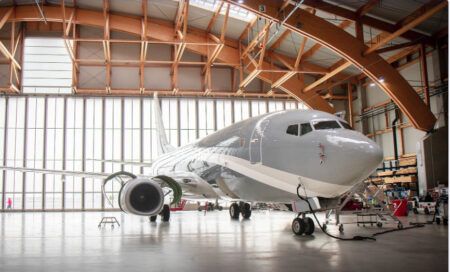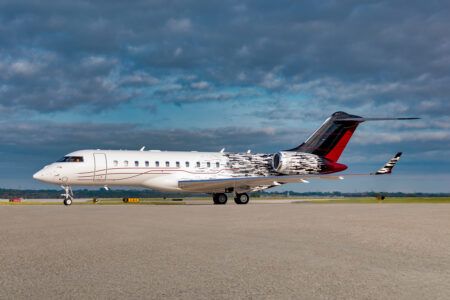


Completion and refurbishment centres are optimising weight on their interior projects, in balance with factors such as noise attenuation and aesthetics, writes Marisa Garcia.
Lightweighting is critical to ensure business aircraft deliver maximum range, payload flexibility and efficiency. The challenge is that efforts to minimise weight must be balanced against providing the luxury finishes, acoustic comfort and bespoke design features that define the VIP experience.
The weight target for a completion often depends on how the aircraft will be used. “Every kilogram matters because it directly affects range, fuel burn, payload flexibility and operating economics,” says Geoffroy Vincent, director of workshops at AMAC Aerospace. “Weight can also influence practical considerations, such as baggage capacity, passenger count and the ability to incorporate additional mission equipment.”
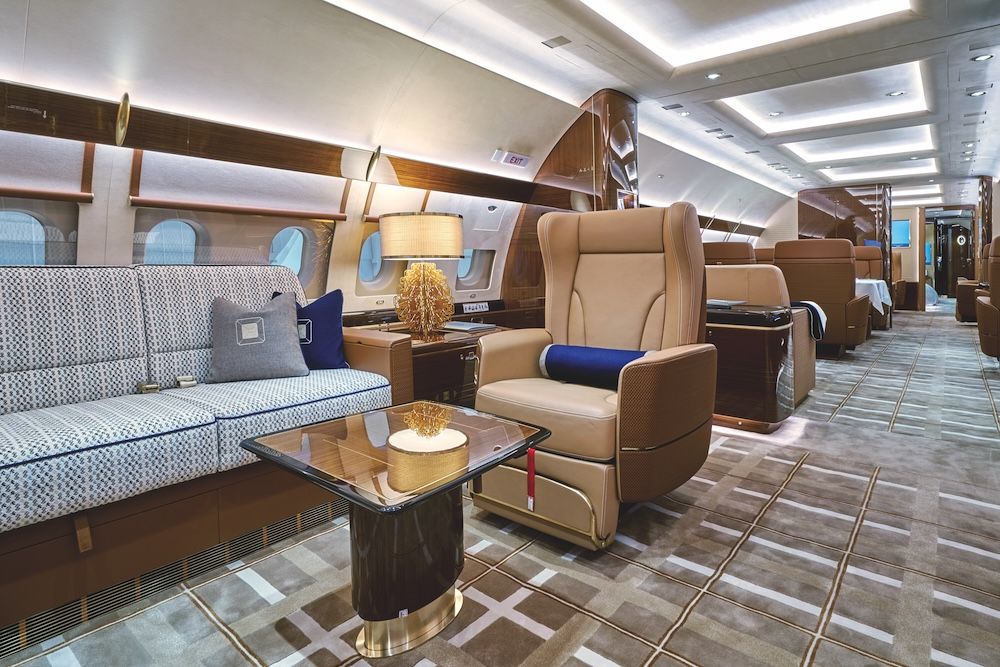
Weight estimation
At AMAC Aerospace, initial estimates are built using historical data from comparable programmes and adjusted for the proposed cabin layout, monument count, material selections and systems architecture. Weight budgets are then allocated by cabin zone and system category to identify the areas of greatest sensitivity.
Cabin weight management begins during the earliest specification discussions. “Effective lightweighting is less about a late optimisation exercise and more about maintaining weight awareness throughout the design and completion process,” says Vincent. “Because VVIP interiors are highly customised, configuration control discipline is critical; seemingly small design decisions can have cumulative impacts. The real challenge is intelligent optimisation rather than aggressive minimisation. The best interiors achieve a balance between engineering efficiency and the expectations of the VVIP market.”

Jean-Marc Larochelle, director of technical sales at Comlux America, also emphasises the balancing act at play. “The pursuit of reduced cabin weight adds another layer of complexity to modern interior design, demanding the use of highly specialised materials, without any concession to the levels of elegance and craftsmanship our customers expect,” he says.
Completion centres are pooling improvements across multiple disciplines, including structures, finishes, systems integration and manufacturing processes.
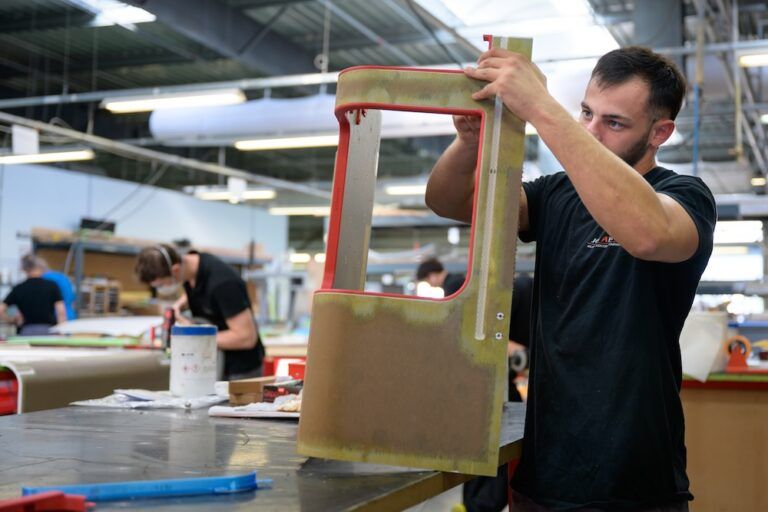
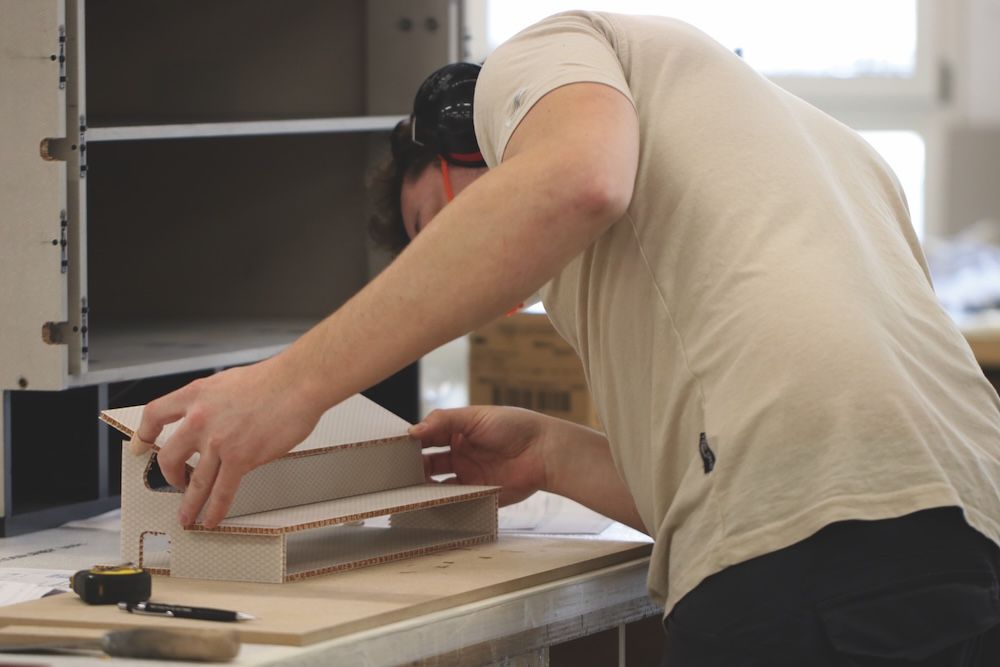
According to AMAC Aerospace, advanced honeycomb sandwich structures continue to underpin many modern lightweighting strategies. AMAC Aerospace Group company JCB Aero has strived to push innovation through developments in sandwich panel construction – for example a lightweight panel based on carbon fibre-based solutions rather than traditional materials, which also uses less resin. “This panel is 50% lighter than an epoxy glass panel,” says Eric Cagnat, senior technical expert at JCB Aero.
Materials that can contribute to lightweighting include lighter seat foams and mattresses, and lighter technologies for panelling and cabinets, says Christoph Fondalinski, VP of completions at Jet Aviation. “In 2023, we launched a new bio-resin for use in non-structural parts, and we continue to explore alternative materials that enhance the performance of the cabin.”
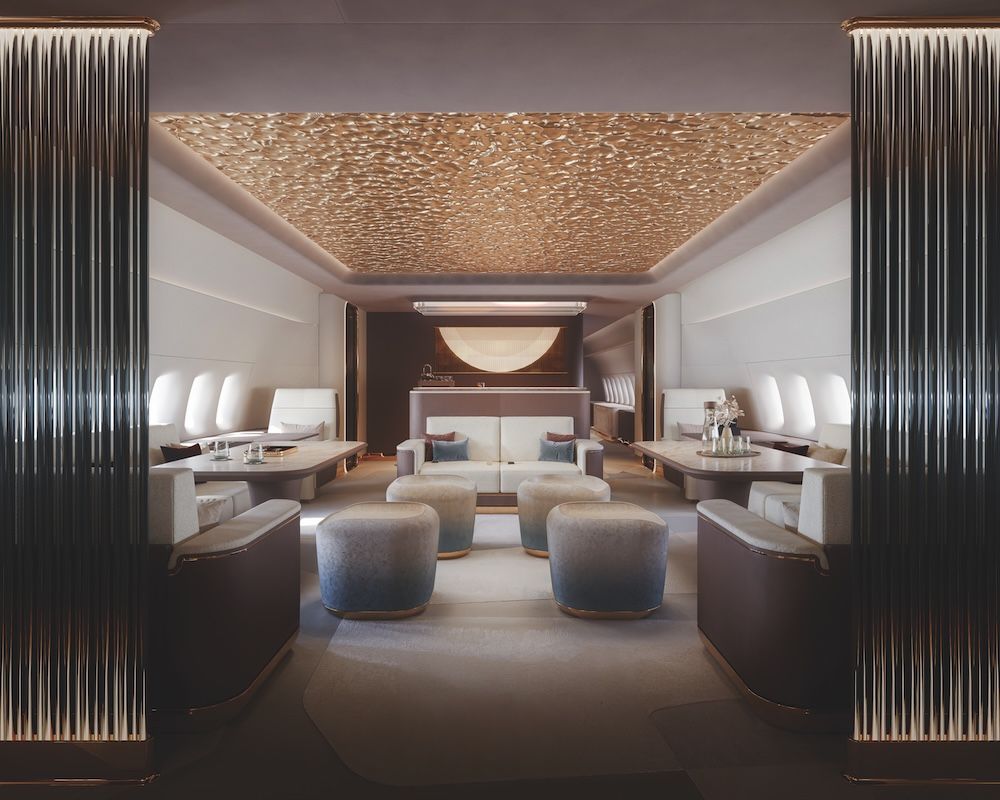
Finish materials
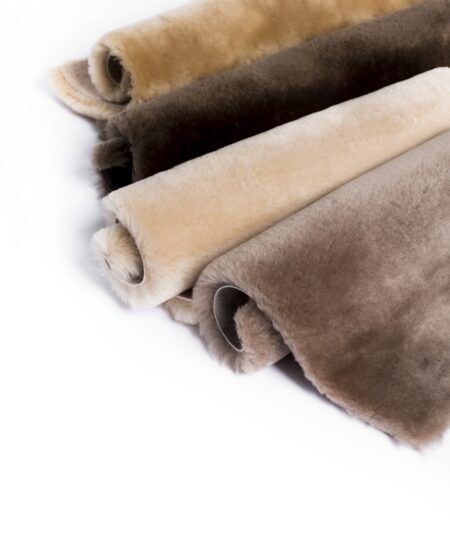
Decorative finish materials are an important area for innovation because they often account for a substantial share of the weight in premium interiors. Vincent of AMAC Aerospace points to lightweight veneers, engineered decorative surfaces, thinner stone alternatives and improved bonding technologies as ways to achieve luxury aesthetics without the weight penalties.
JCB Aero also highlights the potential of alternative finishing methods to deliver savings. Tedlar surface finishes, for example, weigh roughly one-third as much as conventional paint systems, the company says.
Systems integration
Cabin technology is another area where weight reductions are emerging. “Miniaturisation and integration have made a meaningful difference,” says Vincent. “CMS, IFE architecture, lighting technologies, and wireless functionalities can reduce wiring complexity, equipment volume, and associated installation weight.”
Wireless technologies, in particular, offer opportunities to remove substantial amounts of cabling from increasingly connected cabins.
Manufacturing processes
Build and manufacturing techniques also play an important role. JCB Aero has introduced an optimised mortise-and-tenon assembly process that replaces traditional pin-based assembly methods. According to Cagnat, the new approach can be up to twice as light as conventional assemblies. The company has also integrated veneers directly into sandwich panel curing processes, eliminating the need for backing wood and delivering weight reductions of between 30% and 50% compared with standard veneer applications.
Soundproofing balance
Larochelle of Comlux America describes balancing acoustic performance, environmental comfort and weight optimisation as one of the company’s most demanding engineering challenges. “Advanced insulation systems, acoustic panels, and vibration-dampening materials must be precisely integrated to reduce cabin noise while preserving passenger comfort, yet these same treatments can introduce pressure losses and airflow restrictions that compromise environmental control system efficiency,” he says. “Materials must simultaneously achieve meaningful structural and performance gains while supporting intricate finishes, refined textures, and seamless visual integration throughout the cabin.”
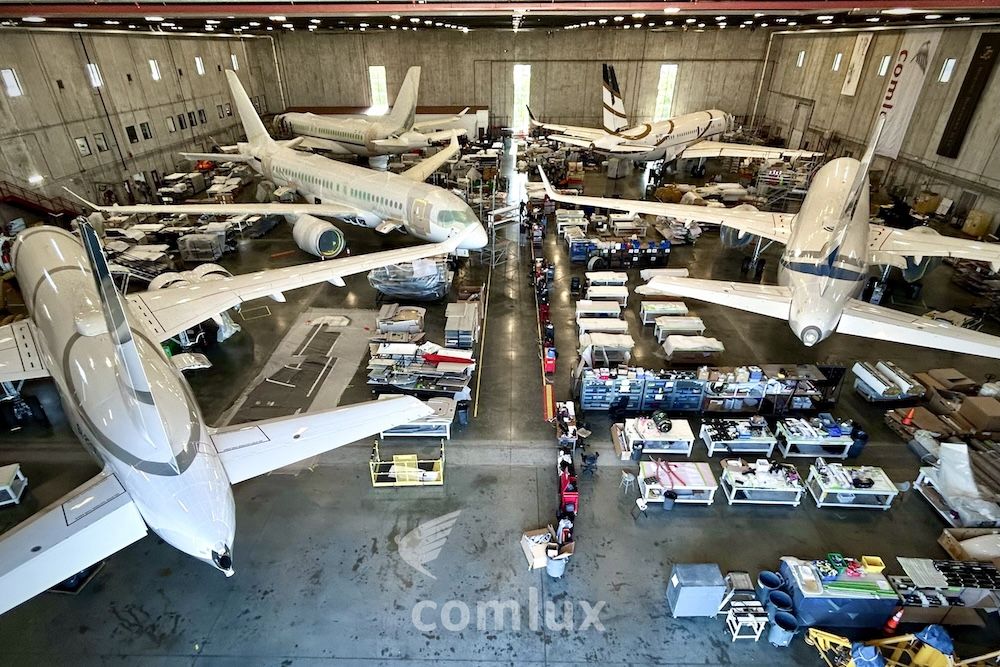
Qualification and service
Certification presents another hurdle. Materials must satisfy demanding aerospace qualification requirements before they can be adopted in certified interiors. “Our engineering team includes a certification department, and we have worked closely with suppliers to certify materials not traditionally or previously used in aviation to enable further innovation in design and engineering,” says Fondalinski of Jet Aviation. “For example, in the development of our in-house IFE and CMS, IFX, where we certified supplier hardware for use in the aircraft cabin.”
AMAC Aerospace’s Vincent points out that there are also other practical factors: “The most valuable innovations are those that improve weight efficiency while remaining certifiable, durable, repairable, and appropriate for premium interiors.”
What’s next?
Despite decades of progress, industry experts believe considerable opportunities remain. Innovation in decorative materials is an ongoing priority. Completion centres are seeking convincing lightweight alternatives to stone, metal and other premium finishes that preserve authenticity while reducing mass. Improved acoustic materials that provide better noise attenuation at lower weights are also high on the wishlist.
JCB Aero sees future demand driven by next-generation aircraft, particularly electric aircraft, in which weight reduction is especially critical to optimise range and payload capacity. The company also expects an increasing focus on sustainable materials with lower carbon footprints and improved health and environmental characteristics – avoiding CMRs (Carcinogenic, Mutagenic, and toxic to Reproduction) and ensuring REACH compliance.
As Larochelle of Comlux America observes, success depends on “close engineering collaboration, precision manufacturing, and rigorous quality control” to ensure interiors meet both performance objectives and the aesthetic standards expected in world-class VIP aviation.
This feature was written by Marisa Garcia and first published in the July 2026 edition of Business Jet Interiors International. For the full feature, click here.