

Jérôme Nelet, associate creative director at NewTerritory, discusses the firm’s vision for building circularity into aircraft cabin architecture.

What’s your favourite detail from a recent design?
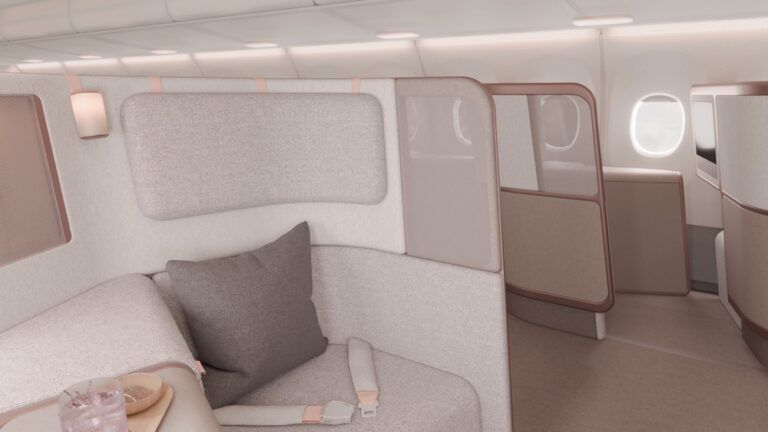
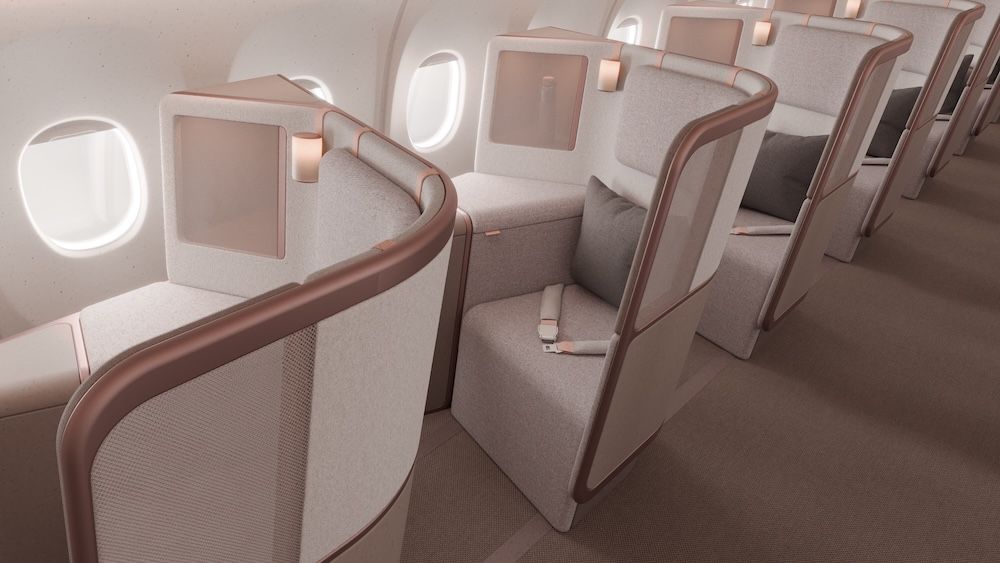
One of the most meaningful recent explorations was Re:Frame, a modular seat architecture developed in response to a sustainable aviation design challenge set by Business Jet Interiors International.
Instead of starting with aesthetics, we began with a simple question: why are aircraft seats designed to be replaced as complete units when only certain elements age or become outdated? Upgrades are often driven by technology, branding changes or wear and tear, while the core structure remains usable.
Re:Frame separates the seat into layers. The lightweight structural base is designed to last, while comfort, technology and trim components are modular. These elements can be upgraded, repaired or replaced independently. This is particularly relevant in business aviation, where cabins are frequently refurbished between owners or lease cycles.
At end of life, the seat can be disassembled into two primary material streams for easier recycling. The materials are intentional: a hemp-reinforced bio-composite structural frame reduces weight and environmental impact, while surrounding components use recycled and recyclable mono-material PET to simplify traceability and recovery.
What can be learnt from this project?
Circularity must be built into the architecture, not applied superficially. When sustainability is embedded in the system logic, it becomes durable and commercially viable.
Re:Frame is not just a concept seat – it’s a demonstration of how systems thinking can redefine premium interiors for longevity, adaptability and responsible design.
What crafts, materials or ideas are you keen to explore this year?
Increasingly, clients and passengers respond to material honesty over material illusion. We are interested in exploring real materials made viable for aviation performance. Suppliers are now developing ultra-light stone laminates, thin mineral composites and high-performance bonded panels that retain the thermal and tactile qualities of natural stone without the weight penalty. The cool density of real stone, the acoustic dampening of ceramics, the depth of natural fibre composites, these sensory cues create grounding in environments that are otherwise highly engineered and fast-moving.
At the other end of the spectrum, we are equally interested in structural expression. Raw metal finishes, visible grain in composites, and construction that does not hide its logic. Historically, luxury aviation has relied on concealment: wrapped edges, layered veneers, glossy surfaces masking complexity. We believe premium can now embrace performance as part of its aesthetic language. Recycled plastics, mono-material assemblies and bio-composites are no longer compromises. They are becoming part of a new premium code, where lightness signals intelligence, repairability signals quality and patina signals longevity. A material that ages well is not a defect; it is evidence of honesty.
The opportunity is to bridge two worlds that were previously seen as incompatible: high luxury and high performance. By challenging legacy visual codes and focusing on tactile, experiential authenticity, sustainable materials can move from being justified to being genuinely desirable.
This interview was first published as part of the European Design Forum in the March/April 2026 edition of Business Jet Interiors International. Four private jet interior designers based in Europe were invited to share key details from recent projects.