

Connor Weisent, manager of interior design at Citadel Aviation, discusses how an ergonomic study informed a recent cabin project, and how seat designs can integrate inspiration from luxury cars.

What’s your favourite detail from a recent design?
Each project brings its own challenges, and what I love most is creating a detail that, once executed, feels like the only natural choice for that space – subtle and lovely, never kitsch or gimmicky.
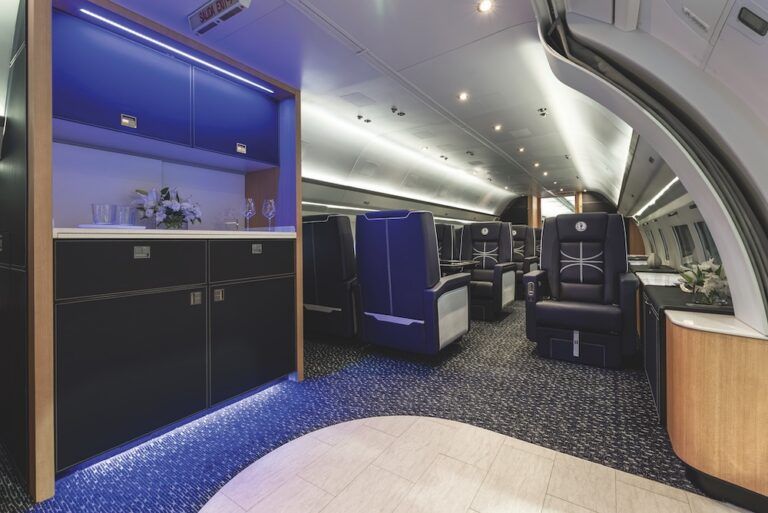
On a recent project, we spent considerable time studying the ergonomics of the clientele. That study shaped not just the seat forms but the spacing between seats and every surrounding element like cupholders and controls.
We layered leathers of varying textures across the seating, unified by impeccable decorative stitching that reads as quiet craftsmanship rather than ornamentation. The result is an interior where the interaction between client and aircraft feels effortless, an unseen but deeply felt attention to detail that elevates the whole experience.
What crafts, materials or ideas would you like to explore next?
There’s always a temptation to jump straight into 3D software, but pencil and paper still offer something CAD can’t: the ability to rapidly ideate complex, organic forms that would take hours to wrangle out of a modelling program, letting the idea stay fluid before it’s locked into geometry.
I feel the same about fabrication: laser cutting, CNC and additive manufacturing are incredible tools, but they can’t replace techniques that only come from years of hand experience, like hand carving, embroidery and painting. I make a point of spending time directly with craftspeople in those disciplines, both to understand what’s truly possible by hand and to find new ways to bring that handmade quality into a cabin.
What challenges are private aircraft designers faced with right now?
The biggest challenge right now is reconciling truly bespoke design with increasingly compressed timeframes. Clients want a one-of-a-kind interior, but aircraft downtime windows keep shrinking, and every custom decision still needs to clear the same regulatory scrutiny it always has. There’s no shortcut through certification, so the only real lever left is process: clear communication and strong, trusted relationships with vendors who understand our standards well enough to move fast without us having to compromise on quality.
How are you inspired by other sectors?
VIP aviation has long drawn its cues from yachting, residential and high-end hospitality design. Lately, though, I’ve been drawn to a different source: contemporary luxury transportation. Next-generation automotive interiors have developed a visual language built around movement, efficiency and personal comfort, and that language translates well to the air.
Applied to a business jet, this thinking points to a new approach to seating. Instead of a traditional seat, imagine each one as a fully integrated suite, with amenities, IFE and personal space built in. Every passenger gets a defined, considered environment that feels tailored to them.
The key is balance. These suites would coexist with open, conversational lounge areas. That way, the design sharpens the individual experience without sacrificing the social, communal quality that sets VIP cabins apart from commercial travel.
This interview was first published as part of the Americas Design Forum in the September/October 2026 edition of Business Jet Interiors International.