

From Dolby Atmos integration to wave-field synthesis and beamforming, to panel-excited audio, various technological avenues are being taken to create immersive sound experiences in business and VIP aircraft, writes Jonathan Dyble.
Excellent cabin audio is today recognised as a non-negotiable part of the passenger experience in business and VIP aircraft.
“High-quality audio was a luxury way back, but now it’s an expectation,” explains Anthony Molina, former director of aftermarket sales for Alto Aviation, part of the Heads Up Technologies group. “If a customer is paying millions of dollars for an aircraft, it’s reasonable for them to expect that aircraft to deliver everything their homes and luxury vehicles do.”
OEMs are having to meet these demands, layering in additional technologies, features and comforts as differentiators. Within that mix, audio quality has become imperative in providing market-leading entertainment provisions for travellers used to world-class systems.
“This category of flyer wants to have the same quality features they enjoy in their homes, vacation properties, their vehicles, their yachts,” says Robert Hamelink, VP of product development and co-founder of Bongiovi Aviation. “Audio falls within those expectations. They want sound quality to be ubiquitous; to carry over as they travel.”
Wave-field synthesis
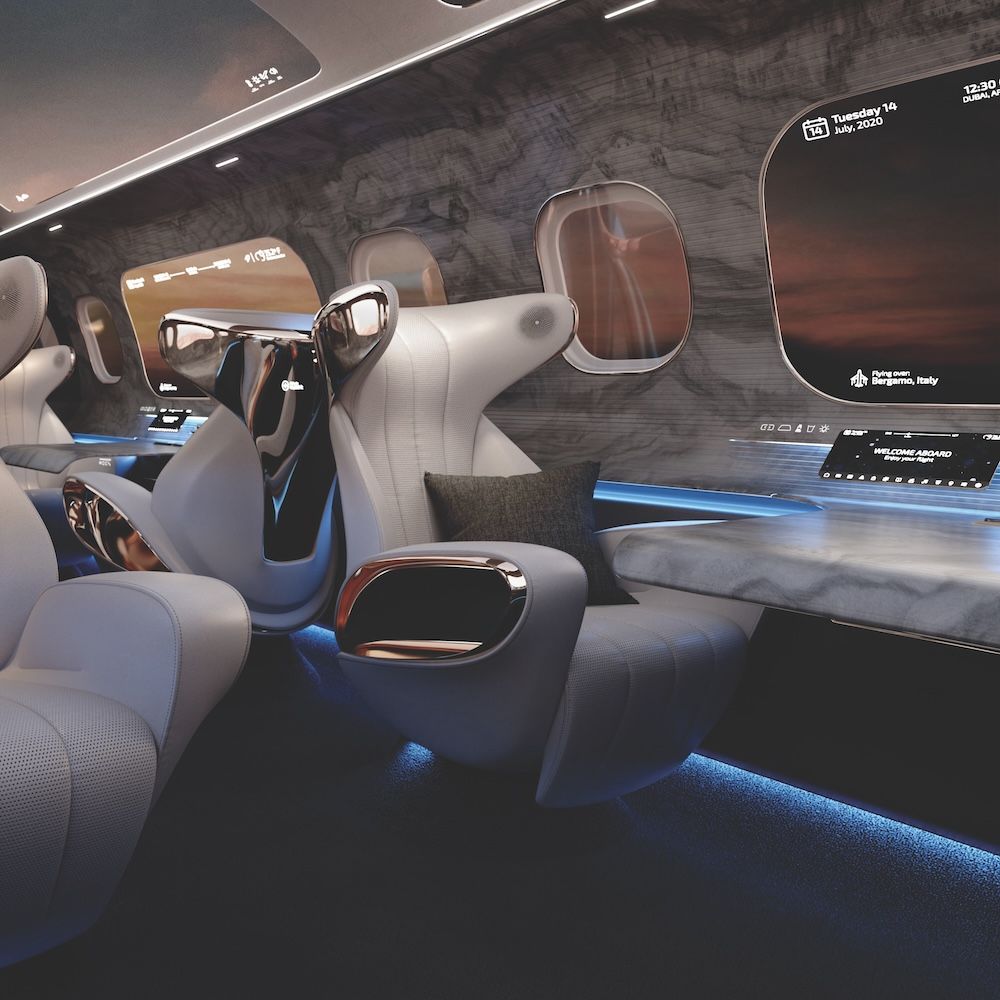
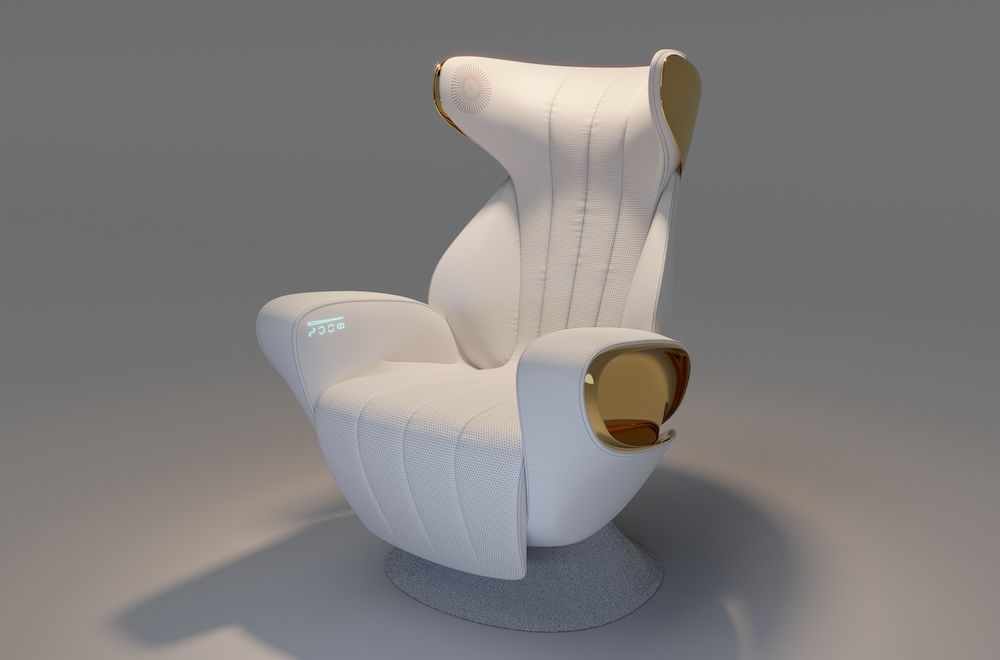
Various technical routes are being explored within the evolving audio market. For example, Rosen Aviation – which specialises in displays, IFE technologies and cabin electronics – has introduced the Immersa in-seat AudioSphere. This solution is centred around the idea of immersion, of using audio as part of a multidimensional, sensory experience.
“There’s a science called proprioception that relates to how your hearing and visual balance align,” explains Lee Clark, senior VP of strategy at Rosen Aviation. “When what you hear doesn’t match what you see, your brain works harder, and you can become fatigued or even nauseated. We’re trying to do the opposite, creating audio experiences that are truly immersive and engaging.”
Clark says that noise levels have dropped dramatically in modern business jets, with many cabins now sitting in the 40dB range, quieter than most offices. He adds that as that ambient environment has improved, aircraft now provide environments conducive to the use of high-tech audio technologies.
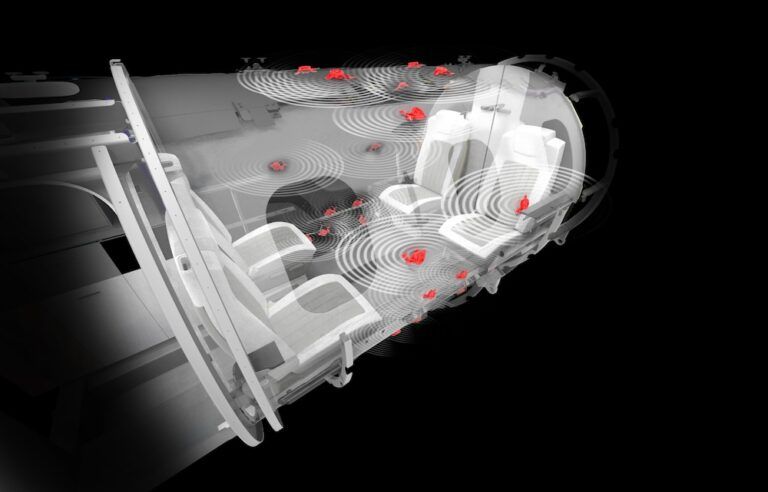
To this end, the company has partnered with Laurence Dickey, creator of the iconic Bowers & Wilkins Nautilus speaker. “Laurence is an absolute guru on soundwave propagation, and that’s the basis of our Immersa solution,” says Clark. “This unique, patent-pending combination of wave-field synthesis and beamforming allows us to create a tightly controlled audio sphere centred on the listener’s ears, with 20dB per metre attenuation. It basically means you can be reading a book undisturbed by somebody sitting next to you who’s watching a movie at a good volume.”
To create what Clark describes as an “in-seat holographic audio sphere”, the firm has prioritised two pillars of audio reproduction – accurate tone and timbre, and audio spatiality. “The latter often gets overlooked,” Clark contends. “In the real world, our ears can sense where a noise is coming from – not only the direction, but also how far away it is. We’re trying to replicate this in a hi-fi audio world, where sounds have width, height and depth, allowing the listener to judge the distances between performers on a stage, for example.”
Speakerless audio
By contrast, Bongiovi Aviation is removing the need for traditional speakers in aircraft entirely. Using a patented algorithm developed by music industry veteran Tony Bongiovi, the firm uses transducers to excite the aircraft’s existing interior panels, turning the sidewalls, headliners and other surfaces into speakers.
“Tony’s been in the music industry for more than 50 years,” explains Hamelink. “He designed the Power Station recording studio in Manhattan – one of the most awarded studios in the world – and has engineered and/or produced for several very famous artists, including his cousin, Jon Bon Jovi. But in addition to his music industry experience, he’s somewhat of an audio savant, and he developed this patented algorithm that we use to remaster music in real time, and that enables us to make the interior panels of aircraft sound like high-fidelity speakers.”
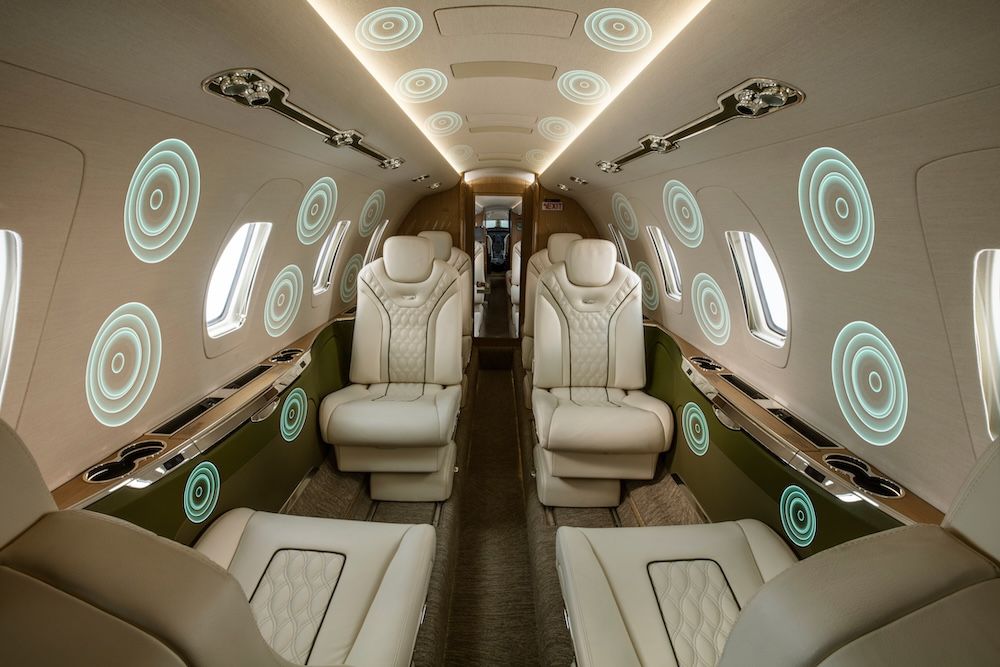
Using integrated signal-processing technology in combination with speakerless transducers that mount behind interior ceiling and sidewall panels, the result is an immersive, three dimensional audio experience throughout the cabin. It’s a solution the aviation market has quickly taken to, debuting with HondaJet in 2018 as a linefit option on the HondaJet Elite. In fact the technology has been installed on more than 500 business jets of various sizes – both as a linefit option on various airframes and in aftermarket refurbishment projects.
“Our panel excited audio offers several advantages,” Hamelink explains. “The transducers are only 1in deep, for example, so they’re able to fit into existing structures without reducing cabin space. It also means they can be placed in the headliner, providing that audio verticality that contributes to the immersive experience.”
Sensory ecosystem
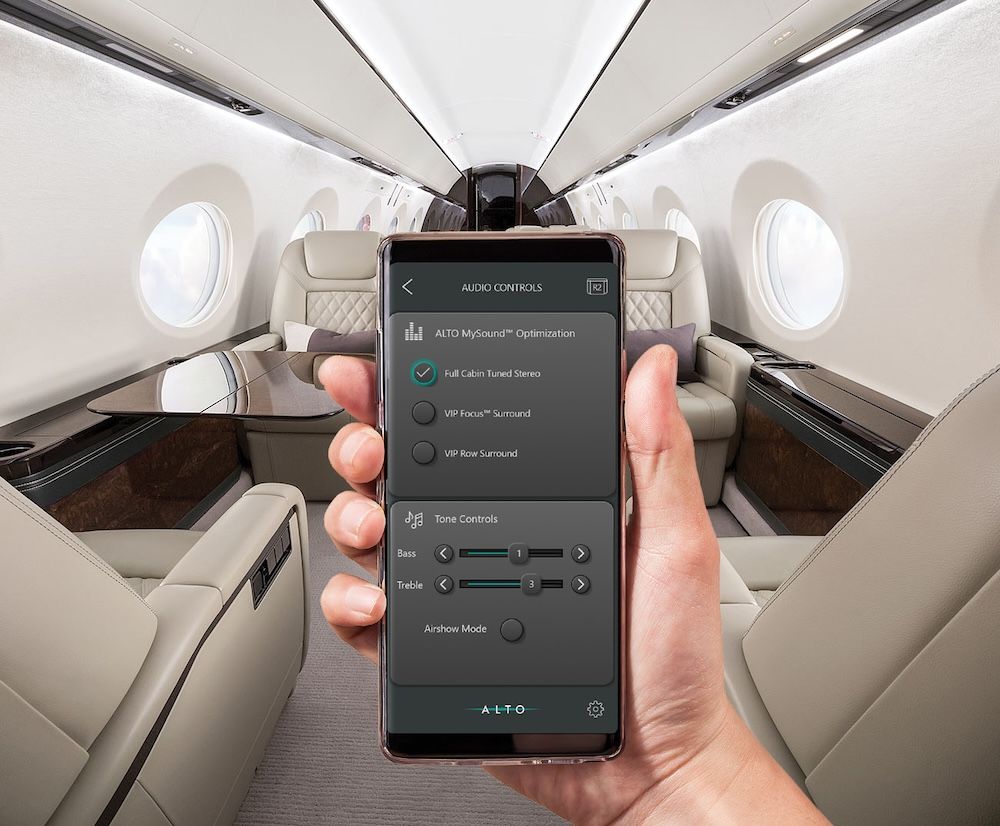
Alto Aviation meanwhile offers systems ranging from the baseline Alto Sound through the nVelop Premium Surround Sound system with surround decoding that takes off-centre monitors and seating into account, to the top-of-the-line Alto Soundstage immersive surround-sound system for onboard cinema areas.
Alto MySound enables passengers to pick from different modes, using an app or keypad. “This is a dynamic audio processing solution that really transforms your cabin into whatever space you need,” explains Molina. “From a listening perspective, it adds a ton of depth to the audio experience within the cabin.”
The technology is designed to fill an entire cabin with rich, balanced sound, creating a booming concert hall or focused office space in the sky. It can also transform specific rows or sections into a private listening lounge or envelop a single passenger in spatial audio.
Capitalising on joining the Heads Up Technologies group in 2023, Alto Aviation’s offering is now being further optimised with Dolby Atmos surround-sound, via a decoder card being developed by sister company Innovative Advantage.
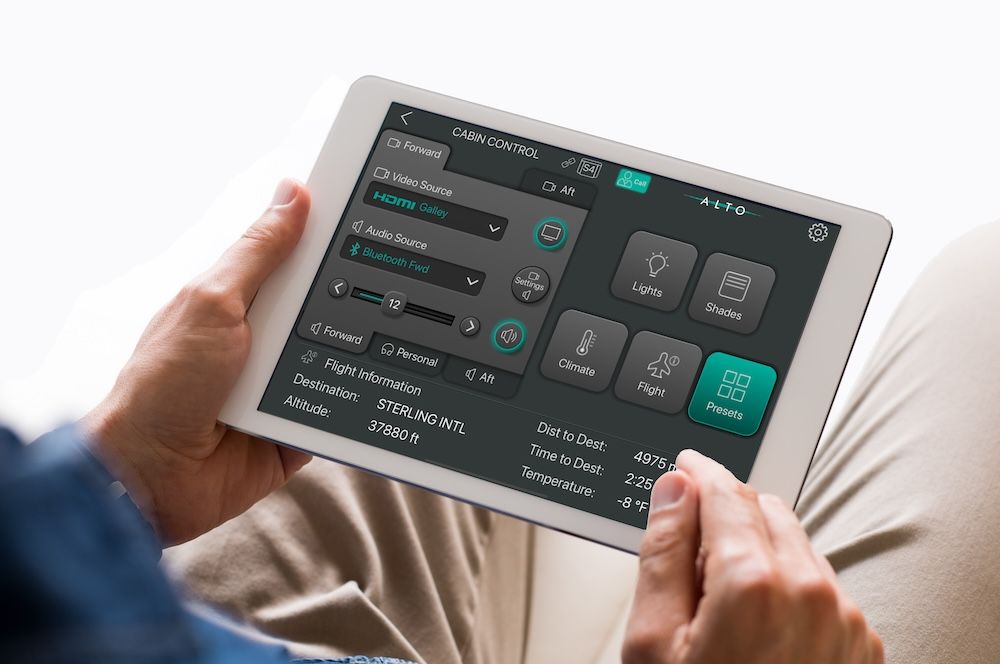
“This has involved significant collaboration between Innovative Advantage with their audio/video distribution system (AVDS) backbone and the Alto Aviation custom-engineered speakers and amplifiers,” Molina explains. “The system now delivers more than 500 channels of uncompressed multi-channel digital audio, and combining it this way, it ensures a zero-latency, lossless signal. Customers expect that if they have Atmos in their home or car, they should have it on their aircraft. We’re pleased to have made that happen.”
Every Alto installation is custom tuned by the firm’s trained audio engineers, who create acoustic maps of each aircraft, tweaking digital amplifier and speaker locations to optimise the sound.
Overall Alto Aviation is focused on defining what the customer is looking for and designing the system around those requirements. “This is in our DNA,” Molina adds. “The roots of the company are in audio engineering; it was founded by Don Hamilton and Steve Scarlata, whose professional backgrounds included developing high-end car audio systems for Bose.”
Indeed the company has a focus on designing and manufacturing its own loudspeakers, subwoofers, amplifiers and other hardware. With space and weight remaining ever present constraints in aircraft design, recent developments include the ASW 524 and 724 side firing subs, which can be hidden without large grilles, as well as the 2.5in-deep 201 subwoofer, designed for the fiercely space-restricted light jet category. These are a handful of the firms’ proprietary products, it having developed more than 100 patents.
What’s next for cabin audio?
Be it speakerless audio, spatial audio, or sound isolation in individual seats, cabin audio continues to evolve. At Alto Aviation, the next chapter centres on personalisation and integration, moving towards a fully unified cabin environment where audio, lighting, CMS functions and 4K video distribution sit under one vendor, making it easier to deliver highly tailored passenger profiles.
Bongiovi Aviation, meanwhile, is also working with Innovative Advantage to implement the IA Dolby Atmos decoder card with its system. While Hamelink says the Bongiovi speakerless system already delivers a “pseudo Atmos effect”, the firm is exploring how this new technology can further enhance audio dimensionality.
Rosen Aviation, having perfected its spatially precise ‘hot seat’ concept, is now focused on expanding that experience across the wider cabin. New technologies enabling broader dispersion and multi seat immersion are in development.
This feature was written by Jonathan Dyble and first published in the March/April 2026 edition of Business Jet Interiors International. The full version is available here.