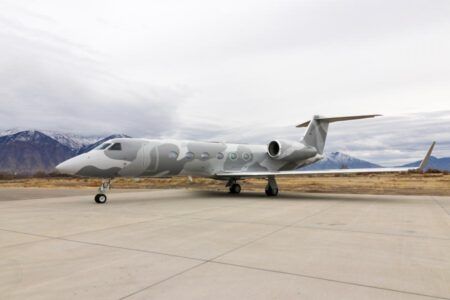


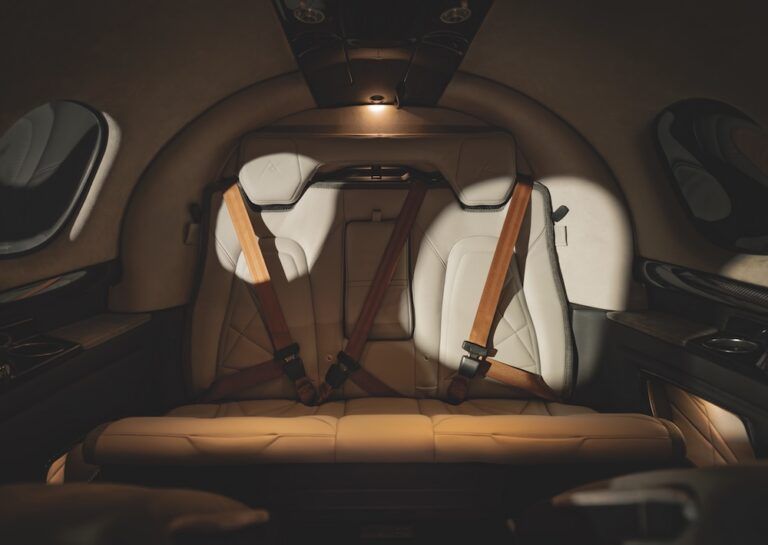
The third generation of Cirrus’ Vision Jet single-engine personal jet offers expanded passenger capacity via a new bench seat option, on top of a complete redesign and flight deck upgrades.
The Vision Jet series has been a fixture of the single-engine ‘personal jet’ category since the first generation’s first delivery at the end of 2016. There are now around 730 Vision Jets flying around the world across all the iterations of the platform, which also includes the G2 and G2+, debuted in 2019 and 2021 respectively. This February saw the unveiling and first delivery of the third generation.
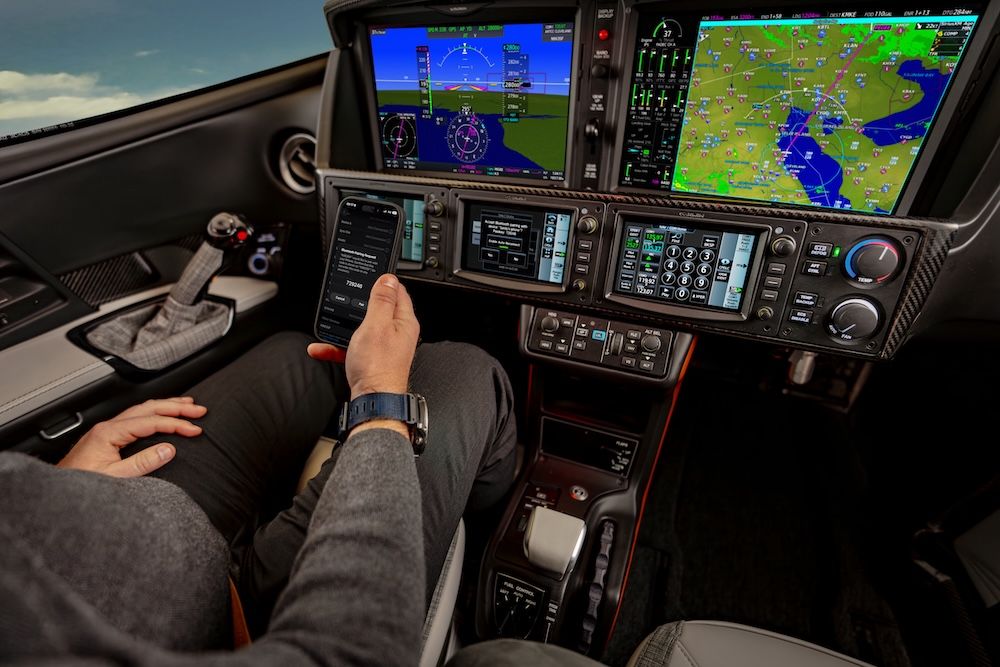
The G3 has a redesigned interior, flight deck upgrades including ATC Datalink, and exterior tweaks. “We’ve gone through a few iterations of innovation over the Vision Jet’s short life of almost 10 years,” says Matt Bergwall, executive director of the Vision Jet product line at Cirrus. “That is a hallmark of Cirrus, we’re always improving the product. But with generation three, it’s big features.”
The biggest change is a capacity expansion to seven people including the pilot, that is, from ‘five plus two’ – five adults and two children – to ‘six plus one’ – six adults plus a child or possibly another adult, Bergwall says, depending on the size of all the individuals. This is achieved via a new option (with the Premium and Arrivée trims or Xi-Designed aircraft) that replaces the third row’s one adult seat and two smaller seats with a bench.
Bergwall reveals that a six-adult capacity had been requested “quite a bit” by customers, whether to accommodate a larger family on a short mission, or three couples going out to dinner or a sporting event.
The idea was in development for about three or four years. “We were trying to figure out the slope of the seat, and how we can comfortably fit two more adults and ensure that flight experience is on par with the other seats,” says Bergwall. “We ended up deciding to redesign every single seat in the aeroplane. I think our customers will be pretty thrilled.”
Seat redesign
A safety measure common to all Vision Jets is a stop on the floor to prevent the pilots’ seats from sliding too far back to access the flight controls when in the flight position. On previous-generation models a two-handed operation was required to push the seat back even when not in flight position – lifting a lever up above a peg and manoeuvring the seat back. This is still the case for the G3 when in the flight position, but not now at other times (when getting in to or out of the seat for example). Now the lever automatically lifts the mechanism above the peg, enabling the seats to be adjusted in a single-handed operation.
The middle and third-row seats retain the previous models’ modularity, meaning they can be removed or installed as needed. They affix to hard points on the floor, and lock or unlock via a lever on each seat.
Cirrus also changed the honeycomb structure of the seat bases, which are designed to crush in a certain way to keep the passenger safe in the event of a Cirrus Airframe Parachute System deployment. For the G3, the honeycomb weave has been made a lot tighter. “On previous Vision Jets you could actually hear the honeycomb crinkle a little bit when you sat on the seats,” says Bergwall. “It feels a lot more refined now, you’re not hearing that noise anymore.”

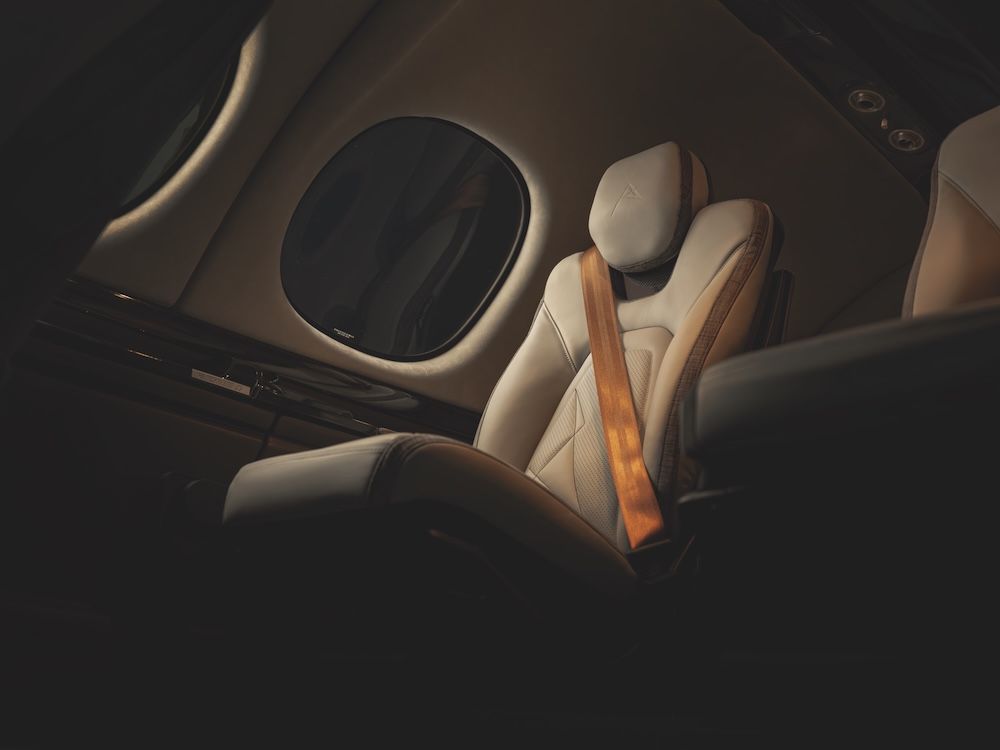
Although the second-row seats have the same hard points, the redesign gives about 2in of extra legroom for the back-row occupants. The seat bases now also include a cut-out to accommodate the feet of those passengers seated behind.
New foam kits were applied to all the seats for more comfort, the positioning of the headrest was tweaked and armrests were refined. “The cladding on the bottom is more sophisticated as well,” says Bergwall. “It has fewer pieces and is made of a material that resists scuffing.”
There are new hardshell seat backs, which “clean up the overall look”, comments Bergwall. They are now customisable, depending on the trim level. The new bench seat configuration is 30lbs lighter than the five-plus-two configuration.

Trim level differences
There are two new standard colourway options at the Standard trim level, and five Premium offerings. Bergwall says about 90% of customers opt for Arrivée, the highest level, which gives access to the highest quality carpet and seat leather, along with the Alcantara seatbacks and the option of carbon fibre or brushed aluminium for the seatback panel.
The new collection of Arrivée colours – ranging from lighter greys to black, dark blue, tans and more – are aligned with the SR Series product line and somewhat driven by what Cirrus see customers opting for through its Xi customisation programme.
Most of the customers who don’t opt for Arrivée instead choose the Xi programme, where they work with Cirrus designers, reviewing material and paint samples, and visualising their selections via real-time modelling. Xi also gives access to certain materials that are not otherwise available – such as wood veneer – and full customisation over aspects such as seat stitching types and colours.
One of the big changes for the G3 is that the way people consume entertainment onboard has been decentralised, catering for a more personal experience for each passenger.
Previous-generation Vision Jets featured an IFE screen that folded down from the ceiling, connected via an HDMI cable, and a centre console that unfortunately “blocked the entrance to the back of the aeroplane” says Bergwall. Realising that most people now want to consume their own media via their own PEDs, Cirrus designed individual tray tables for the G3 that deploy from the sidewall for the middle-row seats. The tray tables have a flap to hold the PEDs.
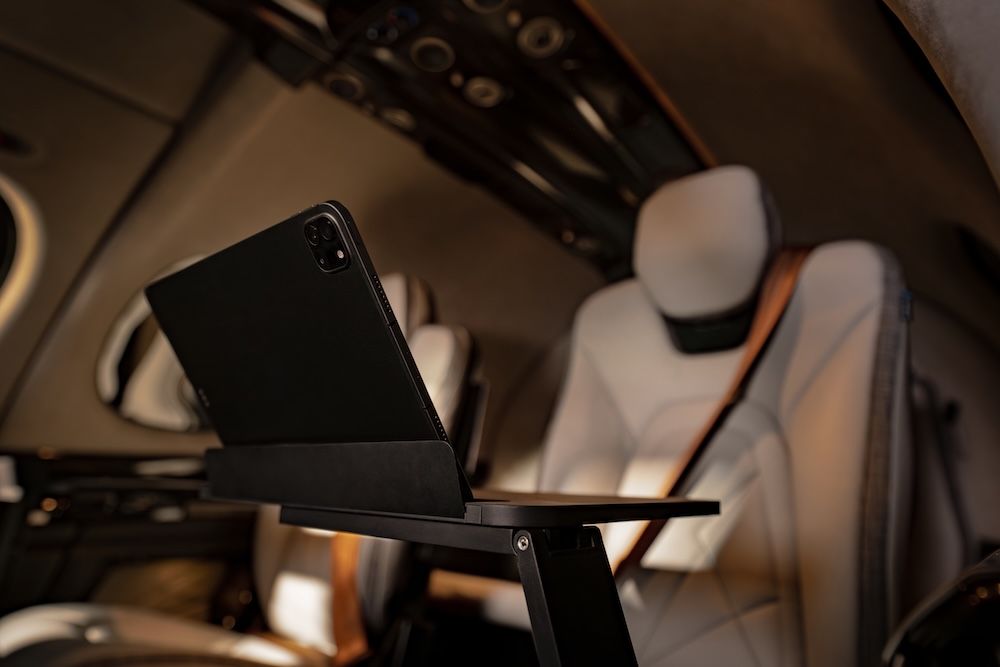
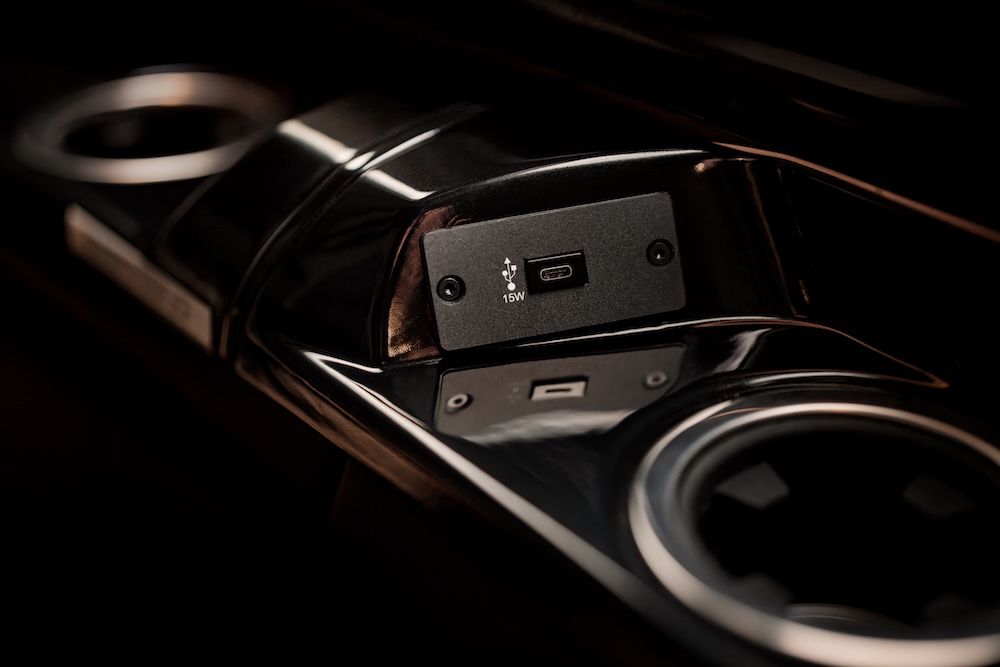
Additionally, there is now a removable panel on the back of each seat, attached magnetically. It exposes a cold shoe mount for PEDs, but the adapter can fit many other types of mounts. “You can put whatever you want to, whether a magnet to hold your device, a clamp, tonnes of these things you can use to adapt to whatever electronic device you have,” says Bergwall. “All passengers have access to USB-C power as well.”
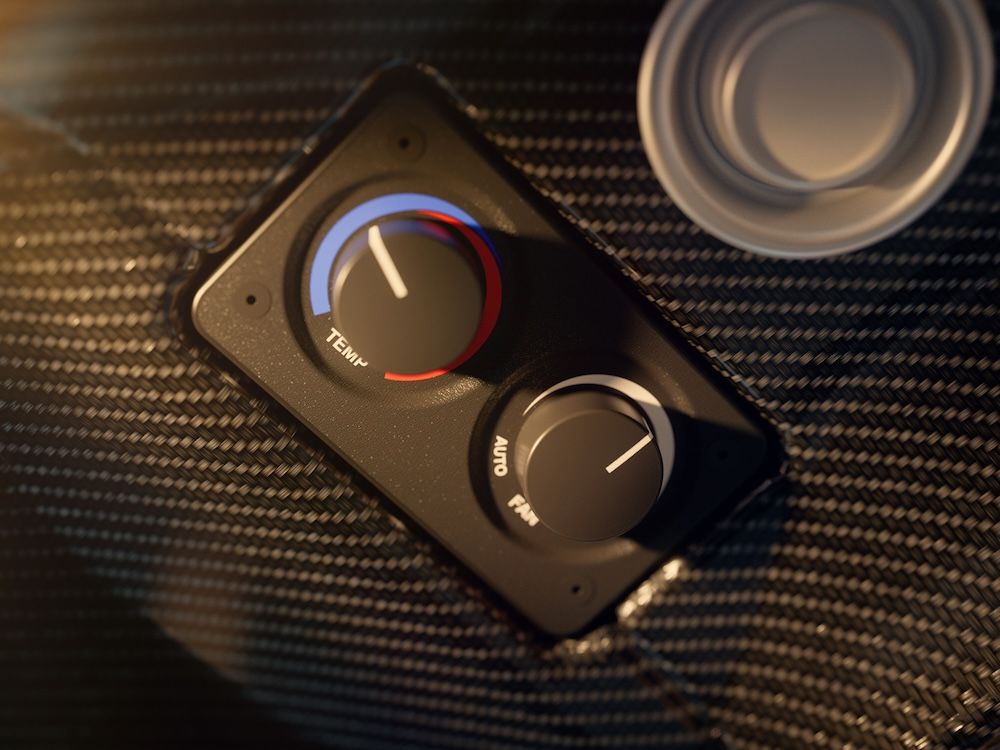
The air conditioning system is another tweak for the G3. Previously, a mechanical door would open up every time the air conditioner was turned on, to bring in the air. “We have now changed this to a fixed grate or panel,” says Bergwall. “In the past, the mechanical door opened and caused a disruption in the airflow that created a change of noise in the cabin. It wasn’t all that loud, but was noticeably different. Without that door there, we maintain the same cabin noise whether the air conditioning is on or off.”
This feature was written by Izzy Kington and first published in the July 2026 edition of Business Jet Interiors International. The full version is available here.
Images courtesy of Cirrus.